
Bottle feeding, one feed at a time
A comfortable cuddle, room for pauses and a little less pressure over the last few millilitres: getting to know bottle feeds together.
The essentials
- Hold your baby close and give them time to pause or finish.
- Follow current guidance for preparing, cleaning and storing the milk you use.
- Record what your baby drank, with an estimate if some was spilled.
A feed is still time together
Bottle feeds can be a welcome chance to sit down and get to know the person who has just joined your family. Whether the bottle holds expressed breast milk or formula, you can hold your baby close, talk quietly and watch their face as they feed.
Find a comfortable seat and support your baby in a partly upright position, with their head supported. Let them draw the teat in when they're ready. Stay with them throughout the feed; a propped bottle is unsafe, even when you only need to step away for a moment.
Further guidance: NHS: Bottle feeding advice
Give the pauses a little space
Some babies drink eagerly and then slow down. Others stop, look around and decide whether they'd like some more. Paced feeding makes room for those pauses so the milk isn't flowing continuously while your baby is trying to take a break.
Turning away or slowing down can be a cue to pause or finish. You don't have to persuade your baby to empty the bottle. If finding a comfortable pace is difficult, ask a child health professional to show you. A demonstration with your own bottle and baby can be more helpful than buying another teat without advice.
Further guidance: Pregnancy, Birth and Baby: Bottle feeding your baby
Getting the milk ready
Preparation often happens while someone is calling from the next room and the clean bottles are still drying. Give yourself a clear place to work, and keep the current preparation and storage guidance where everyone who makes a feed can find it. Expressed milk and formula have different handling requirements.
Follow local health guidance and the product instructions, measure formula exactly as directed and use properly cleaned equipment. Don't microwave a bottle: milk can heat unevenly. Follow the appropriate instructions for discarding leftovers after a feed. Yesterday's bottle entry won't tell you whether today's milk is safe to use.
Further guidance: NHS: Bottle feeding advice · Pregnancy, Birth and Baby: Bottle feeding your baby
How much actually went into your baby?
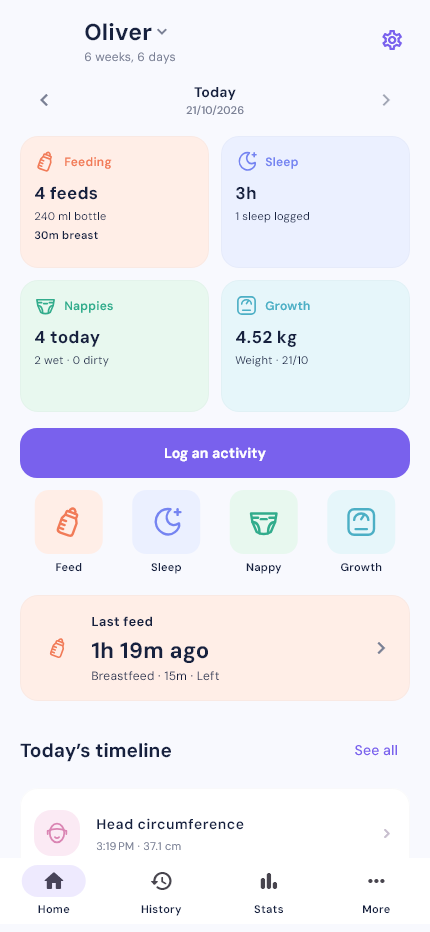
If you offered 120 ml and there's 30 ml left, the consumed amount is 90 ml. That's the number to save in your feeding log. The feeding amounts tool on this site can do the subtraction when your head is already full of other things.
A spill makes that calculation less certain. Add a short note and use your best estimate instead of trying to recover every drop on paper. Check the unit too, particularly if one caregiver uses millilitres and another uses fluid ounces. Baby Tracker's imperial milk unit is US fl oz.
The handover that saves a conversation
When someone else takes over, a few useful details can spare you both the 'Was that the last bottle or the one before?' exchange. Try a note such as '10:20, 90 ml taken; last 30 ml left over'. Record the feeding time rather than the later moment when you remembered to save it.
If two people were there, agree who enters the feed. It's an easy way to avoid a doubled total. You might also keep a small tray of clean essentials ready for the next caregiver, so starting a feed doesn't involve opening every kitchen cupboard.
Leave room for a different kind of day
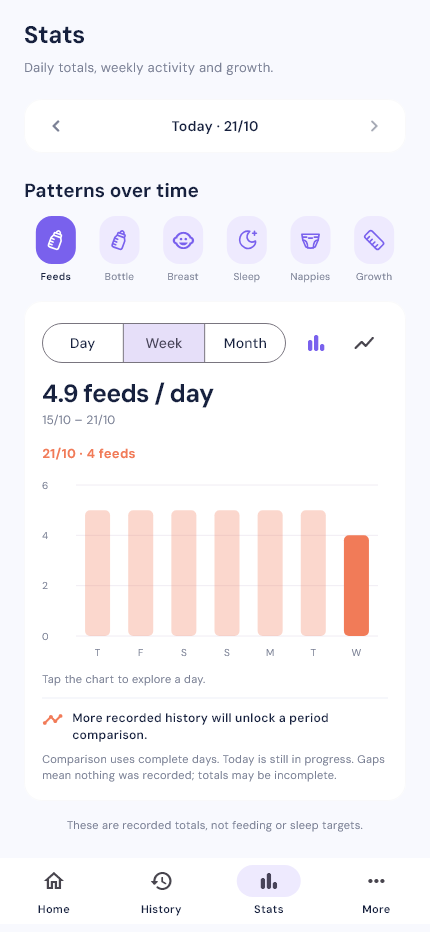
A bottle total can help you describe what's happened, but it shouldn't become a number you're trying to make your baby reach. Before comparing days, check for a missed feed, a duplicate or a timer entered at the wrong time. Keep breastfeeding minutes separate from bottle volume.
If feeding feels difficult or you're worried about what your baby is taking, tell your healthcare team what you're seeing during feeds as well as what you've recorded. The useful question is how your baby is doing, rather than how neatly today's number matches yesterday's.
Sources & further reading
For the full guidance and advice for your circumstances, start with your local healthcare team and these resources.
NHS: Bottle feeding advicePregnancy, Birth and Baby: Bottle feeding your babyGeneral information only. This site and app do not diagnose, treat or monitor medical conditions. If your baby seems unwell, seek medical advice rather than waiting to collect more records.
A little more to explore

Breastfeeding: finding your rhythm
Those first feeds can fill a whole day. Here's how to get comfortable, spot your baby's cues and find support when you need it.
Read guideUnderstanding changing feeding patterns
Another feed already? A bigger bottle yesterday? How to make sense of the changes without spending the day studying a chart.
Read guide