
Newborn sleep: small stretches, changing days
The house may be quiet at 3 am, but life with a newborn rarely follows office hours. A gentle guide to those early, uneven days and nights.
 Sleep
The essentials
- Newborn sleep comes in stretches across both day and night.
- A few familiar settling steps can be easier to manage than a strict timetable.
- Make room for your own rest and ask for practical help.
The clock feels different with a newborn
The days can blur at first. There are feeds when the rest of the street is asleep, naps just as a visitor arrives and stretches when you can't remember whether you've had breakfast. A newborn brings their own rhythm into the house, and it takes time to get acquainted with it.
Early sleep is spread across day and night, and patterns vary between babies. The long stretch someone else's baby managed last week isn't a milestone yours has missed. For now, getting through the next feed, change and rest can be a reasonable way to organise a day.
Further guidance: Raising Children Network: Sleep needs and patterns
Getting to know your baby's tired signs
A yawn is an obvious clue, but tiredness can be quieter: a faraway look, fluttering eyelids or movements that become a little jerky. You may spot a familiar sequence as you spend more time together. It doesn't have to be the same sequence another parent describes.
When you notice those signs, try making things calmer. Put a toy away, lower your voice or move to the place where you usually settle your baby. Hunger and discomfort can look similar to tiredness, so think about those needs too. A clock can't see the baby in front of you.
Further guidance: Raising Children Network: Tired signs
A little difference between day and night
You can keep daytime feeling like daytime: open the curtains and let ordinary household life happen. Overnight, quieter voices and lower lights can help care feel calmer. These gentle cues don't come with a promise about when your baby will start sleeping for longer.
Choose a few evening steps you can repeat without much effort. A fresh nappy when needed, a feed, a cuddle and a quiet song might suit your household. There is no need to build a routine so elaborate that you're worrying about missing its third step while your baby is ready for the fourth.
Further guidance: NHS: Helping your baby to sleep
Set up the sleep space before you're tired
For each sleep, place your baby on their back in a clear sleep space with a firm, flat mattress. The NHS recommends their own cot or bassinet in your room for at least the first six months. Keep the full local safer-sleep guidance handy for everyone who helps with care.
Have a look at the setup in daylight, when you have time to move things around or find the instructions. It is easier to decide where the baby will sleep before an overnight feed than while you're holding them and trying not to wake the rest of the house.
Further guidance: NHS: Safer sleep advice
A sleep log with a light touch
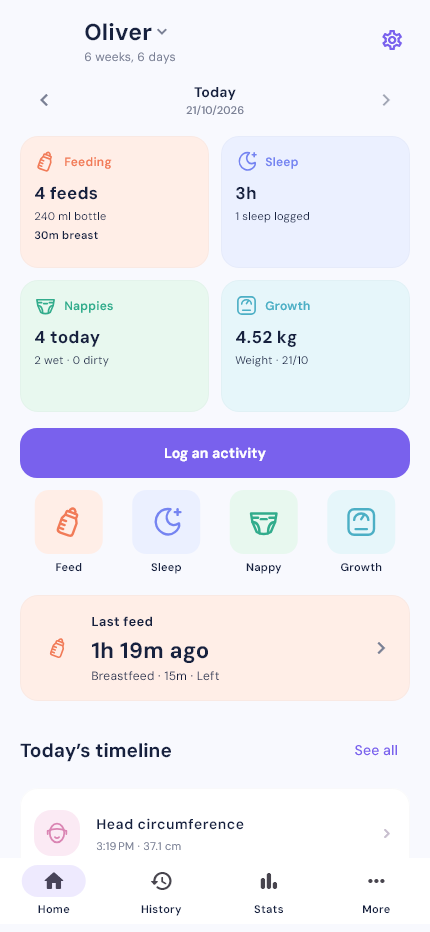
You might want a log simply because, by the next feed, the last nap is hard to remember. Start a timer when your baby seems asleep and finish it when they wake. If you forget, an approximate manual entry is fine. You don't need to identify the exact second their eyes closed.
Only collect detail that helps. A brief note about a nap another caregiver handled can be useful; a description of every wriggle usually isn't necessary. If someone has asked you to record sleep for a particular concern, let that question guide what you save.
Your rest belongs in the plan too
'Rest when the baby rests' can sound simple from a well-rested visitor. In practice, you may be hungry, need a shower or have another child beside you. Think about which task someone else could take away, rather than treating rest as another thing you haven't managed properly.
Ask for something specific: a meal brought over, the washing put on or an hour of company through a difficult evening. If exhaustion or worries about sleep are becoming hard to manage, speak to your healthcare team. You can need support even when your baby's sleep looks unremarkable on paper.
Sources & further reading
For the full guidance and advice for your circumstances, start with your local healthcare team and these resources.
Raising Children Network: Sleep needs and patternsRaising Children Network: Tired signsNHS: Helping your baby to sleepNHS: Safer sleep adviceGeneral information only. This site and app do not diagnose, treat or monitor medical conditions. If your baby seems unwell, seek medical advice rather than waiting to collect more records.
A little more to explore
A simple starting point for safer sleep
A sleep space doesn't need to look like a nursery photograph. A few clear choices, shared by everyone who cares for your baby, matter much more.
Read guideNaps, night waking and the bigger picture
A short nap can feel very long when you've spent half the morning settling. Here's a kinder, more useful way to look at the whole day.
Read guide