
Nappy changes: a simple everyday routine
From the first slightly awkward change to the one-handed outfit rescue, a practical guide to getting everyone clean, comfortable and settled again.
 Nappies
The essentials
- Put your supplies within reach before you begin.
- Clean gently, dry carefully and keep your baby safe throughout the change.
- A quick entry afterwards is enough if you're keeping a log.
The first few changes take a little organising
At first, a nappy change can feel like a job that needs an extra pair of hands. The clean nappy is underneath the baby, the wipes won't separate and the spare vest has somehow disappeared. A small amount of preparation makes the whole business easier.
Choose a spot where you can reach what you need without stepping away. A basket for clean nappies, cloths and spare clothes means you aren't searching through drawers each time. Restock it when someone else is holding your baby, or make that one of the jobs you hand over to a willing visitor.
Have everything ready before the nappy comes off
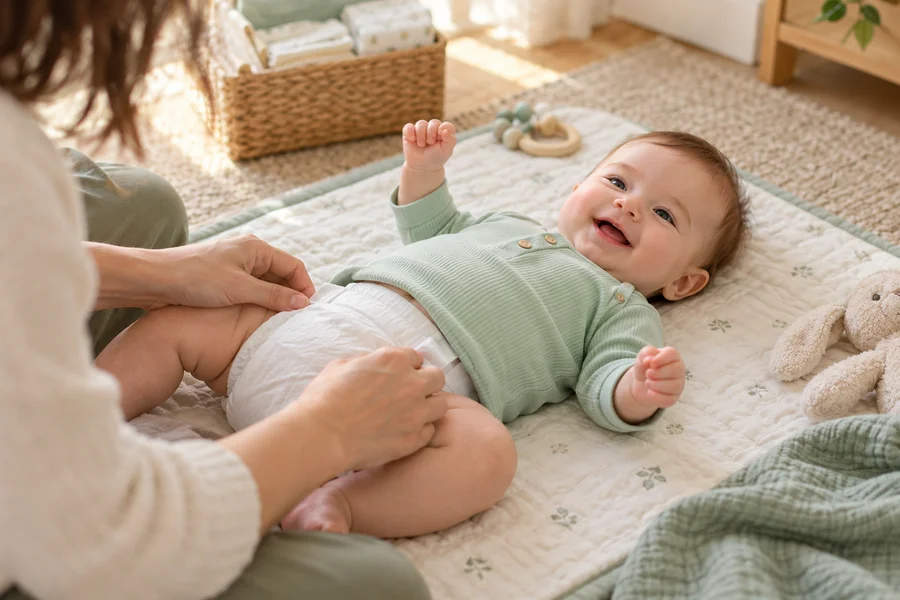
Wash your hands, then gather a fresh nappy, water and cotton wool or suitable wipes, something to dry with and somewhere for the used nappy. Add spare clothes if you suspect this change will involve more than the nappy itself. A washable mat can make clean-up simpler.
The floor is a practical place to change a baby on a mat. If you use a raised changing surface, stay with your baby and never turn away or rely on a strap. If you've forgotten something, take your baby with you to get it. The drawer can wait.
Further guidance: NHS: How to change your baby's nappy
A gentle clean and a comfortable fit
Clean the nappy area gently, including the folds, and wipe from front to back. Take your time over a messy change rather than scrubbing. Pat the skin dry before putting on the fresh nappy. Follow the nappy manufacturer's fitting guidance and keep a newborn's healing belly button uncovered.
Check that the nappy sits comfortably before you do up the clothes. Keep the next clean outfit close enough to reach, particularly during the early weeks when a small leak can turn into a full clothing change. Having a cloth nearby also helps with a surprise wee halfway through.
Further guidance: Raising Children Network: Changing a nappy
You can make a little connection here
There's plenty of practical work involved, but a change can also give you a few minutes face to face. Talk through what you're doing, make a familiar sound or offer a smile. As your baby gets older, a safe toy can give busy hands something else to do.
Some changes will still involve grumbling, and some will happen while everyone wants to get out of the door. You don't need to make each one into an activity. Aim for a safe, gentle change, with room for a small chat when it suits you both.
Further guidance: NHS: How to change your baby's nappy
Deal with the nappy, then the phone
Once your baby is dressed and somewhere safe, dispose of or store the used nappy appropriately and wash your hands. If you're using cloth nappies, have a clear place for the used ones so every caregiver knows what goes where.
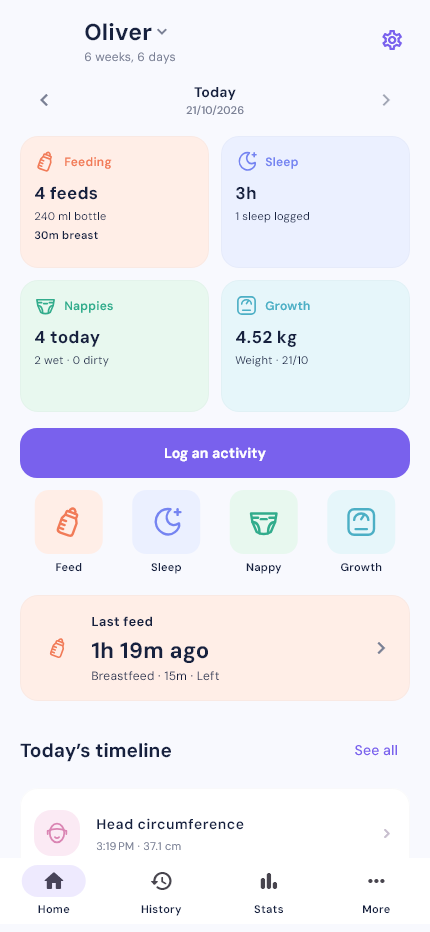
Then save the change if you're keeping a record. Wet, dirty or mixed is usually enough to begin with. If one nappy contained both wee and poo, choose mixed as one change rather than entering it twice. Your hands and attention belong with your baby while the change is happening.
Further guidance: Raising Children Network: Changing a nappy
Make the next change easier for someone else
A useful handover might be 'changed at 11; mixed; skin looked comfortable'. A short note about a concern or care plan can help too. Check whether another caregiver has already saved the change before adding it again.
Before leaving the changing spot, put the next nappy where it's easy to find and note anything that needs replacing. Those tiny bits of preparation add up when you're both short on sleep. You'll soon have your own way of doing things, including knowing exactly where that spare vest ought to be.
Sources & further reading
For the full guidance and advice for your circumstances, start with your local healthcare team and these resources.
NHS: How to change your baby's nappyRaising Children Network: Changing a nappyGeneral information only. This site and app do not diagnose, treat or monitor medical conditions. If your baby seems unwell, seek medical advice rather than waiting to collect more records.
A little more to explore
Nappy rash: gentle care and when to ask
A sore bottom can make changing time upsetting for everyone. Start with gentle care, a simpler cupboard and a clear idea of when to ask for help.
Read guideKeeping a useful nappy log
'Was the last one wet or dirty?' A simple nappy log can save that conversation, especially when several people are helping with a newborn.
Read guide